
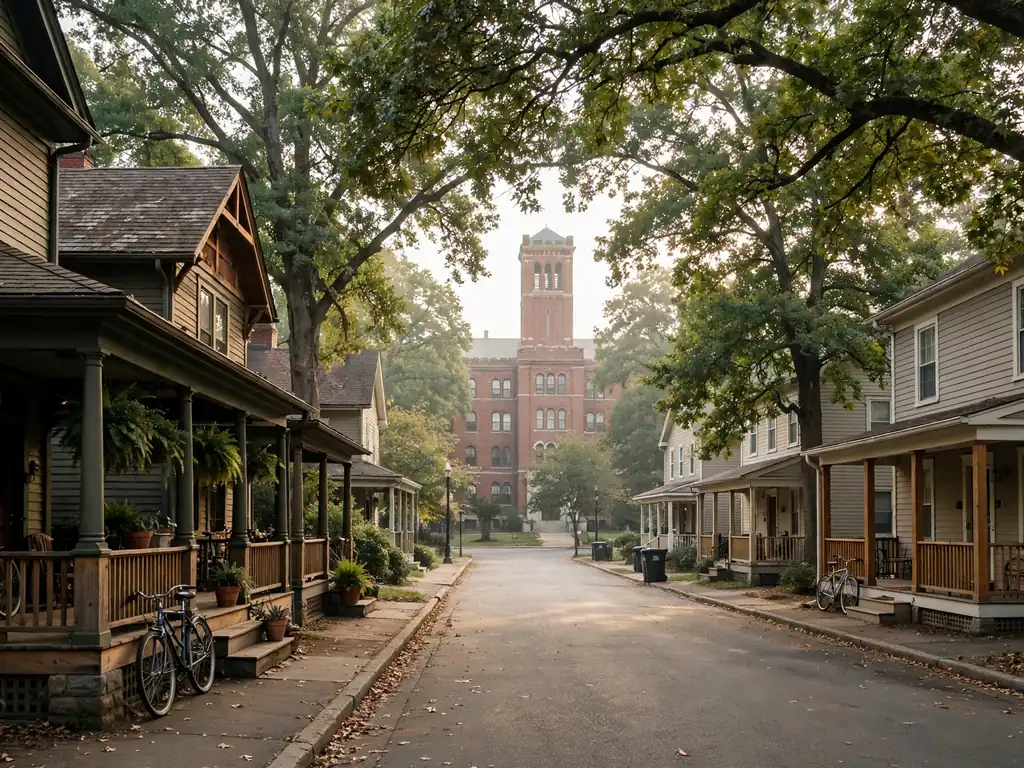
The University District runs on the academic calendar, and its plumbing runs on it too. Leases turn over in May and August, students arrive with more occupants than the house was built for, and the water heater in a rental near Idaho State University works harder in one semester than the same unit would in a family home in a year. A house plumbed for a family of four in 1955 may now hold two rental units and seven occupants. Its heater cycles dawn to midnight on 15.2-grain hard water. Its drains meet the full creativity of student living. And its pipes sit in walls insulated for another era, waiting for January.
None of that is a surprise to anyone who has owned a rental here for a season. What surprises new landlords is how much of it is preventable — and how small the window is for preventing it. That window is the days between tenants, when the unit is empty, the plumber can work without a schedule, and a problem found is a maintenance item instead of an emergency. This is the checklist for that window.
The between-lease checklist
Read the label age. Every tank carries a data label with its manufacture date. In this valley, a tank past eight or nine years on hard water is on borrowed time, and the label tells you that in ten seconds. If the tank is that old and the lease is turning over, the replacement conversation belongs in the vacancy, not in October with a full house.
Flush the tank. A rental heater builds sediment faster than a family heater — more cycles, same hard water. A flush between tenants clears the layer while it is still loose, and the water that comes out tells the plumber whether the tank is healthy or corroding. Our guide to the annual flush explains the habit; in a rental, it is worth doing every turnover rather than once a year.
Check the anode rod. The rod is the part that corrodes so the tank does not, and in hard water it is consumed years early. A rod check between tenants is a cheap part against an expensive tank, and it is the one item on this list that almost never gets done until it is too late.
Listen, and run the hot water. A rumbling tank, rusty hot water, or a shower that runs out fast are the same symptoms as in any home — the difference in a rental is that the tenant may not report them until the heater is gone. Between leases, the landlord can hear and see all three in five minutes. If the symptoms are there, the call goes to water heater repair while the unit is empty, not to an emergency line mid-semester.
Test the relief valve and find the shut-offs. The temperature-and-pressure valve on top of the tank should open and close cleanly, and every property should have its water shut-off and its heater's cold-water shut-off located and labeled — for the tenant, for the plumber, and for the landlord who gets the call at midnight. A shut-off nobody can find is the same as no shut-off at all.
Summer vacancies: plan the replacement then
When a unit is near the end, summer is the time to replace it. The house is empty, the plumber can work on a weekday, and the new tank is chosen for the household it will actually serve — a rental's peak demand, not a family home's. A water heater replacement planned in June costs the same job as one forced in October; the difference is the tenant who never has to call about cold water, and the landlord who never has to answer that call. For owners with several properties around South 8th Avenue and Holt Arena, one summer visit can run the checklist across all of them.
Winterizing the vacant-over-break rental
The district's classic January disaster is the rental that sits empty over the winter break with the heat turned low. A house that held seven students in November holds none in January, and the pipes in its older walls face the coldest weeks of the year with no one home to notice. Winterizing means the heat stays at a sane floor, the vulnerable runs are insulated, the outside hoses are off, and the shut-off location is written down for whoever holds the key. Our frozen-pipe guide covers the full prevention list — for a landlord, the version that matters is the one done before the break, not after it. When a pipe does split in an occupied rental, that call goes through emergency plumbing, and the landlord hears about it from us and the plumber — not from a tenant standing in water.
Landlords who run this checklist between tenants meet far fewer mid-semester emergencies, and the ones they do meet are smaller. If you own a rental near ISU and the turnover window is coming up, call (208) 753-1090 and say the property is a rental — the plumber can work with your tenant on access while you stay the point of contact for approving work, and the heater gets its check while the house is empty. One calm visit between leases is worth a semester of quiet.