
Frozen & Burst Pipe Repair
The winter emergency, in detail: reading the signs, safe thawing, and repairing the split.
Emergency Plumbing — Pocatello, ID
Burst pipes, sewer backups, and heaters leaking onto the floor — emergency calls routed first, with the shut-off steps that protect your home while help is matched.
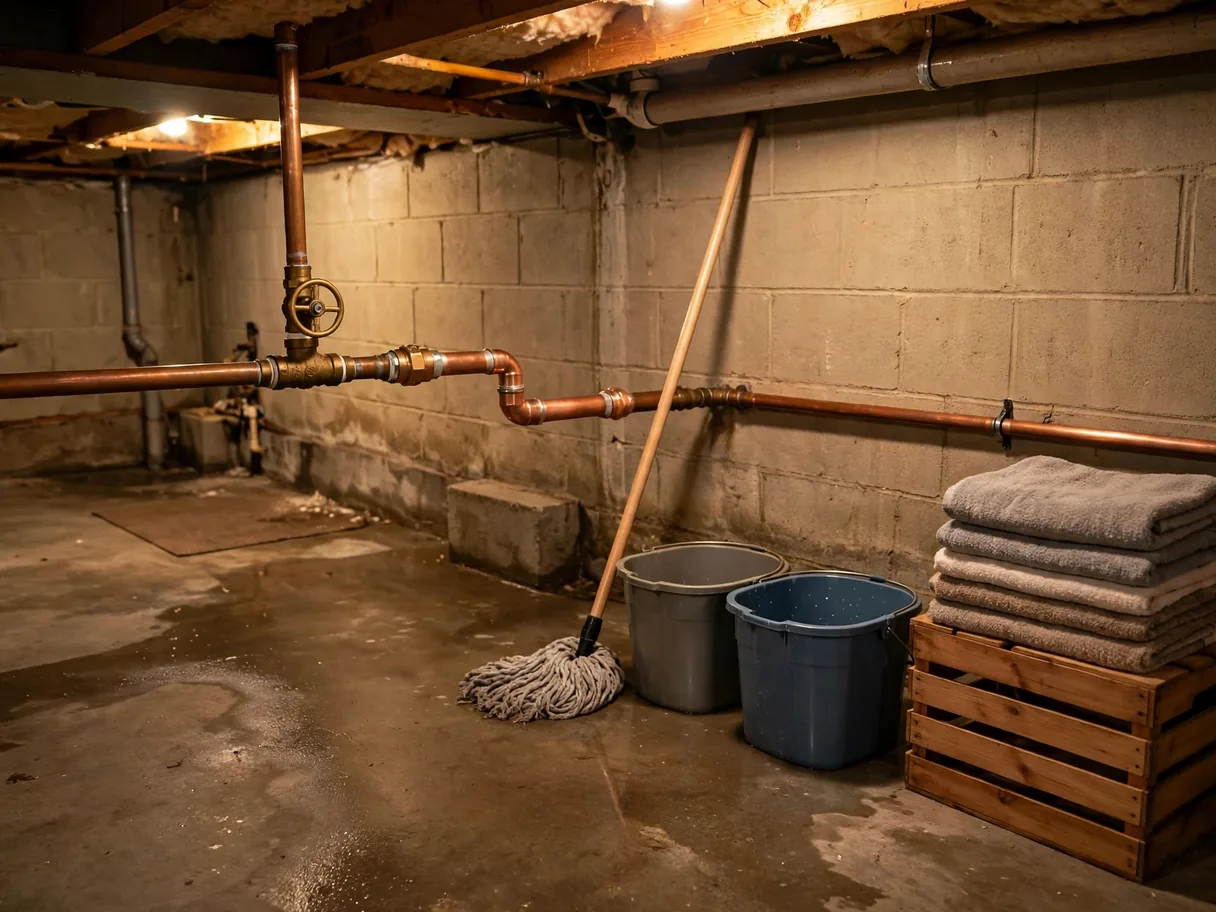
Most plumbing is schedulable. Emergencies are the other kind: the pipe that splits at two in the morning during a January cold snap, the sewer line that sends its contents back into a basement shower, the water heater that lets go and puts an inch of water across the utility room floor. In each case the damage is measured in minutes of flowing water, and the right first move is not a form or a callback queue — it is a phone call that gets the problem routed first and a voice that tells you which valve to close while it happens.
Pocatello Water Heater Co. connects emergency calls with independent local plumbers across Pocatello and Chubbuck. We are a connection service, and we will not dress that up: when you call, we match your emergency with a plumber serving your neighborhood and get your information into their hands without a layer of delay. What we can do on the call itself matters too — walking you to the main shut-off, because stopping the water in the first five minutes saves more of your house than any repair that follows.
Winter writes most of them. With lows in the single digits through January and February, frozen pipes split in exterior walls and crawl spaces across the older housing stock — and the repair side of that work has its own home at frozen and burst pipe repair. Water heaters are the year-round second: a tank that has been corroding in 15.2-grain hard water lets go without asking permission, and a leaking tank routes straight into the water heater repair question — which, for a tank leaking through its body, answers itself as replacement.
Sewer backups are the third. A main line that blocks — roots in old clay pipe are this city's usual suspect — sends sewage toward the lowest fixtures in the house, and that is a stop-everything call: no more flushing, no more running water, and the line work that follows is the camera-and-clear work under sewer line repair and drain cleaning. The fourth is quieter but just as real: a main water line break, or a hidden supply leak that finally shows itself through a ceiling — found and fixed through leak detection once the flow is stopped. Spring writes a fifth: when the snowpack on the benches lets go, a failed sump pump can leave groundwater rising into a basement while every pipe in the house is sound — that call is about getting the water out and a working pump in, before the stored boxes and the furnace share the flood.
The emergencies differ by neighborhood in flavor, not in kind. Old Town and Alameda run the oldest pipe in the city, so their calls lean toward burst galvanized lines and clay sewers. The University District adds rentals where a tenant may not know where the shut-off is — a detail worth settling with your landlord before winter, not during it. Bench homes in Indian Hills catch the cold hardest. Everywhere, the first five minutes belong to the shut-off valve.
Every homeowner should walk this once in calm weather: the main shut-off. In many Pocatello homes it sits where the water line enters the house — a basement wall, a utility room, a crawl space access — with a second valve out at the meter by the street. Turn it clockwise (or a quarter-turn for a lever) and the whole house stops: the burst stops gaining, the heater stops feeding its own leak. Then open the lowest faucet in the house to drain pressure off the lines. That three-minute routine is the difference between a plumbing repair and a flooring claim, and in winter it is the difference between one split pipe and several. If you do not know where yours is, finding it is a fine reason for a calm-weather call — plumbers would rather show you in October than talk you through it in a January panic.
Call (208) 753-1090 and say what is happening and where the water is. You will be told the shut-off steps for your situation and given a straight statement of the expected timing — no invented arrival windows, no promises the valley's roads in a snowstorm cannot keep. The plumber who takes the job stabilizes the damage first, then explains the full repair and its cost before proceeding. That is the deal on every emergency call we route: stop the harm, explain the work, fix it once.
FAQ
Anything where water or sewage is actively doing damage or the house has lost an essential service: a burst pipe, a sewer backing up into the home, a water heater leaking onto the floor, a main line break, or no water at all in the house. A slow drip into a bucket and a running toilet are urgent errands, but they are not emergencies — the distinction matters because emergency calls are routed first.
Stop the water first: the main shut-off valve, usually where the line enters the house or near the meter, protects everything downstream of the problem. Open a tap to drain pressure, keep people and electricity clear of standing water, and move what you can out of its path. If sewage is backing up, stop running water and flushing anywhere in the house. If you smell gas, that is different — leave the house and call the gas utility or 911 from outside.
Emergency calls are routed ahead of scheduled work, and the goal is always the shortest wait the day allows — but no honest service puts a number of minutes on it before knowing where you are and what is already in motion. What you will get on the call is a straight statement of the expected timing for your address, and the shut-off steps that protect your home in the meantime.
Emergency work is priced by the job that is found, not by the hour of the night it is found at on this page — because that depends on the repair itself: a split pipe section, a cleared main line, a failed water heater. Access and extent drive it, the same as any plumbing work. The plumber stabilizes the problem, tells you what the repair involves and what it will cost, and you approve it before the full repair proceeds.
If it is leaking more than a drip — pooling, spreading, or coming from the tank body — treat it as one. Shut off the water to the heater at its cold-water valve, shut off its gas or breaker if you can do so safely, and call. A tank that is leaking through its body is finished, and the same visit that stops the water starts the replacement conversation.
No — and you should not call a plumber first for a gas smell. Leave the house without flipping switches or using phones inside, get clear, and call your gas utility or 911 from outside. Plumbers do gas line work on systems that have been made safe; a live suspected leak belongs to the utility and emergency services first, every time.
If it is winter, a frozen main or a burst that tripped the flow is high on the list; if the neighbors are dry too, it may be a city-side outage worth a call to the water department. Check your main valve is open, look for water where it should not be — a burst often announces itself — and then call. A plumber can tell from a few questions whether the problem is yours, the street's, or the weather's.
The plumber's job is the plumbing: stop the water, fix the pipe, the line, or the heater. The drying, the flooring, and the drywall belong to water-damage and restoration work, which is a different trade. What the plumber does give you is the thing those crews need first — a house where the water has actually stopped — plus a clear record of what failed and what was done, which matters when insurance asks.
Call now and describe what is happening. Emergency jobs are routed first to an independent local plumber serving your part of Pocatello or Chubbuck.