
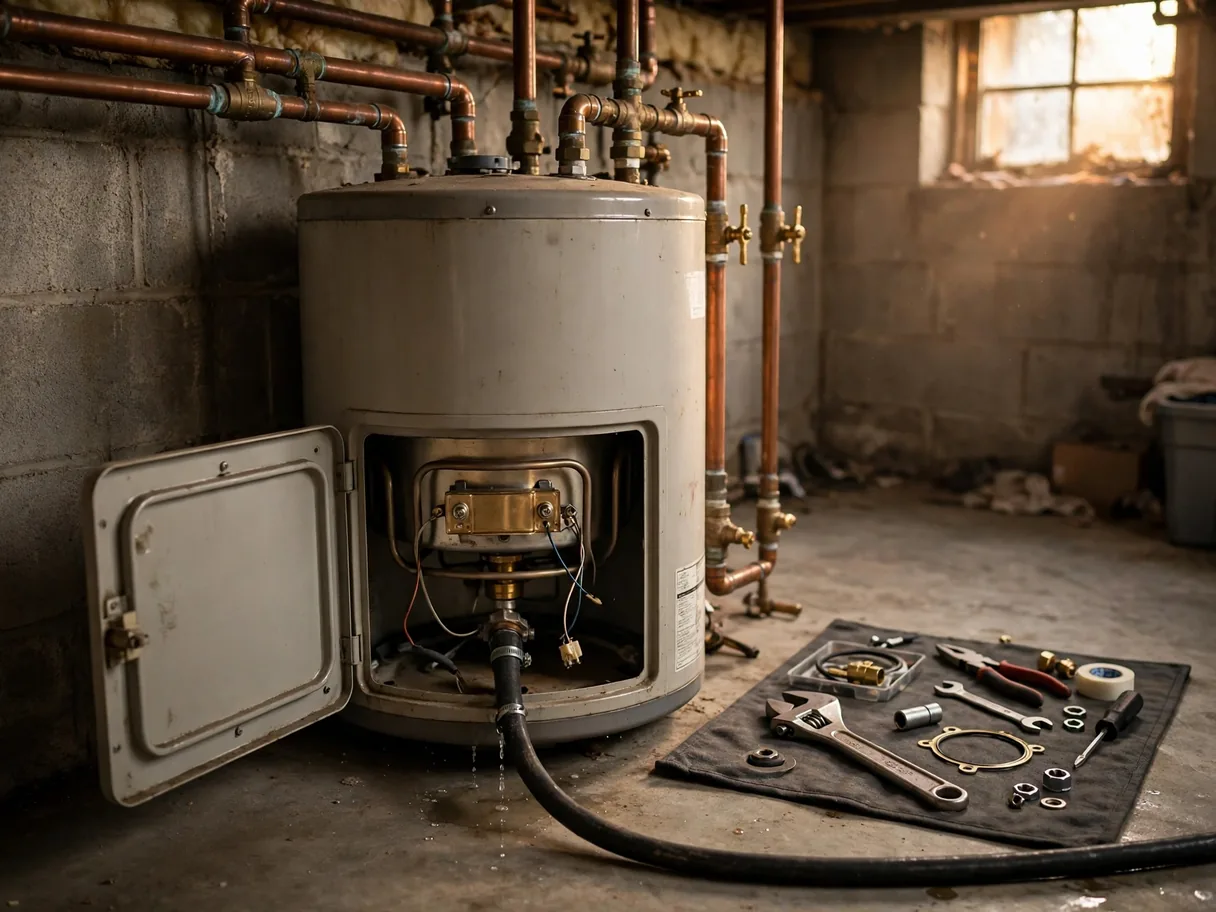
A water heater flush is not a complicated piece of work. A hose goes on the drain valve at the bottom of the tank, the valve opens, and the water that has been sitting on the tank floor runs out — carrying with it the mineral sediment that Pocatello's water leaves behind. That is the whole job, and it takes about fifteen minutes once the hose is on. The reason it matters here more than in most American cities is the water itself: our city supply runs about 15.2 grains per gallon, very hard, among the hardest municipal water in Idaho, and every gallon that passes through your heater leaves a little mineral behind.
What a flush actually clears
Heating hard water forces the minerals out of solution, and they settle on the tank floor. In the first years it is a dusting. Left alone, it becomes a layer — an inch, sometimes more in a tank that has never been flushed — and that layer changes how the heater behaves. The burner fires against it and the trapped water underneath boils and pops, which is the rumbling homeowners hear from the basement. The bottom of the tank overheats, the heater burns extra fuel to push heat through the layer, and the steel wears out years early. A flush takes the layer off while it is still loose enough to move. It also gives the plumber a look at the water coming out: clear water means a healthy tank; rusty or gritty water says the corrosion the rod was holding back has started, and the tank's age needs a closer look.
Why once a year is the right interval here
In softer-water cities, a flush every two or three years is enough. In Pocatello it is not, because the sediment arrives at roughly twice the rate. A tank flushed yearly never gets the chance to build the thick layer that makes the noise and eats the efficiency. The habit is easiest to keep when it is tied to something else — the same visit as the anode rod check, or a calm month when nothing else needs doing. What matters is the calendar, not the season: pick a month and repeat it. The full picture of what that sediment does over a tank's life is in our hard water guide, and the symptoms of a tank that has already been carrying too much of it are on our water heater repair page.
The one caution: old tanks, first flush
A young tank that has been flushed before is a simple job. A tank that has never been flushed in a decade of 15.2-grain water is not — the sediment is no longer a loose layer waiting to drain, it is a crust, and a first aggressive flush can stir up more trouble than it solves, or reveal that the drain valve itself is scaled shut. None of that means leave the tank alone; it means the first flush of an old Pocatello heater is a job worth having a plumber look at before you hang a hose on it yourself. If the tank turns out to be on its last stretch, the honest answer is a water heater replacement planned on your schedule, not a flush forced on a tank that has already given its years.
Flush and softener: the pair that works
A flush clears what arrived; a water softener decides how much arrives. Softened water still carries a small amount of mineral into the tank, so a yearly flush still belongs on the calendar even in a softened home — but the sediment that shows up is a fraction of what raw Pocatello water leaves, and the flush is correspondingly quicker. Together, the two habits are the cheapest heater insurance this city sells: a softener protecting the tank from its first day, and a flush once a year keeping what little gets through from settling in. A plumber can do both in one visit — flush the tank, check the anode rod, and tell you whether the water feeding it is doing the tank any favors at all.
If your heater has started rumbling, or you cannot remember the last time anyone drained it, call (208) 753-1090. We will connect you with an independent local plumber who drains Pocatello tanks every week, and who can tell you in one visit whether yours needs a flush, a rod, or a new tank — and which of those is the honest spend.