
Frozen & Burst Pipe Repair
The bench freezes first. Reading the signs, thawing safely, and sealing the cold out for good.
Indian Hills, Pocatello — Cheyenne Avenue
South-bench family homes above the valley floor — big households, garage water heaters, and the coldest wind in the city every January.
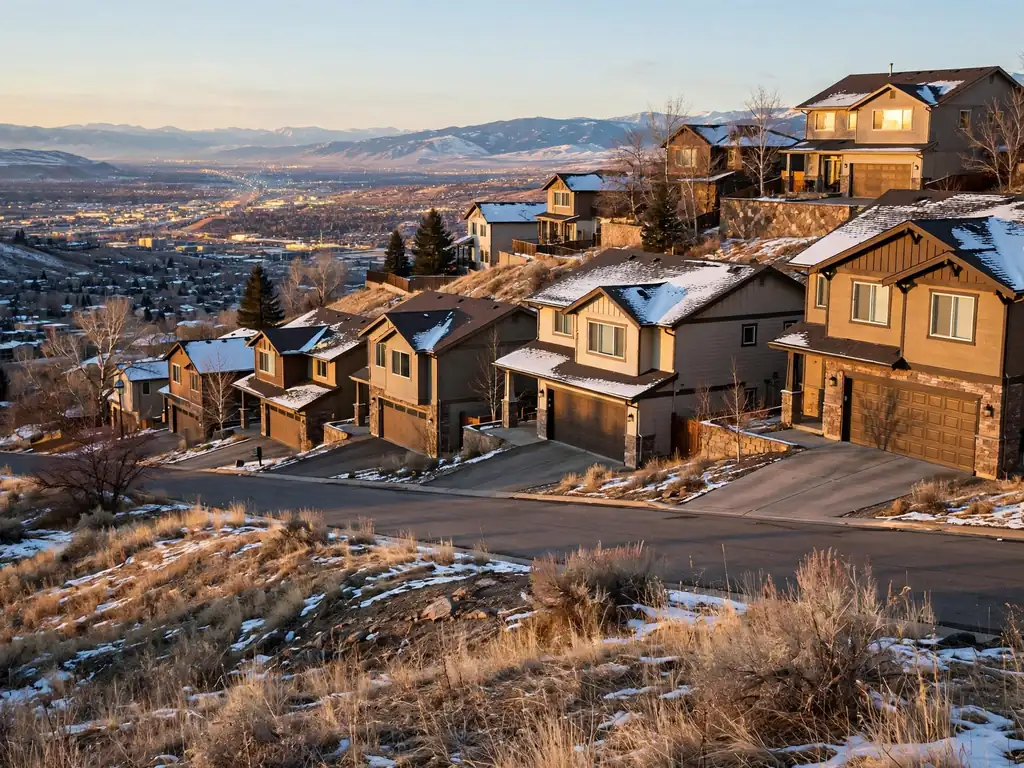
Indian Hills climbs the south bench above Pocatello's valley floor — the streets around Cheyenne Avenue and Indian Hills Elementary School, where the houses look out over the city and the Portneuf Gap beyond. It is family country: single-family homes with garages, yards, and water heaters that serve households at full strength. Building here ran from the later twentieth century into the newer subdivisions still filling the bench's edges, so the housing is younger than Old Town's on average — but the bench adds a pressure of its own that has nothing to do with pipe age.
That pressure is exposure. Up on the bench, winter wind comes across open ground and drives cold into wall cavities, crawl spaces, and garage ceilings harder than the sheltered valley floor ever feels. Pocatello's single-digit January and February lows are simply colder in effect here. Indian Hills is where our frozen and burst pipe repair calls concentrate when a hard snap settles in — pipes on north-facing exterior walls, lines over garages, and hose bibbs nobody drained, all in houses that look far too new to have plumbing drama. The bench teaches the same lesson as the old grid, faster.
The other bench pattern is demand. These are full-size households — kids, laundry, dishwashers, morning showers stacked back to back — and the water heater is the most worked appliance in the house. Water heater repair calls here often trace to that workload on valley water: at 15.2 grains per gallon, a hard-cycling tank builds sediment at family speed, and elements and rods wear on a family schedule. When replacement time comes, the water heater installation sizing conversation matters more than the brand on the box — a bench household that outgrew its tank feels it every single morning.
It is also why tankless water heaters find some of their best fits up here, sized honestly for winter inlet temperatures, and why water softeners are a standard bench install: the mechanical rooms have the space, and protecting a new heater and every fixture from the mineral load pays back across a whole house of appliances. When the water bill jumps in a bench home, leak detection looks first at the long runs — under slabs, out to irrigation tie-ins — where a leak can run silently in the slope's dry soil.
A lot of Indian Hills heaters live in garages, and garage plumbing is the bench's quiet risk list: supply lines exposed to near-freezing air for weeks, relief and drain lines nobody thinks about until they freeze, and the split that shows up as a wet garage floor on the first mild day. A pre-winter check — insulation on the exposed runs, the shut-offs located, the heater's age read off its label — is the cheapest insurance the neighborhood sells, and it is usually combined with a flush that tells you how the tank is really doing. Our hard water guide covers what that flush is fighting, bench and valley alike.
The bench's newer subdivisions add one more modern pattern: the tankless question. Indian Hills mechanical rooms get asked about tankless water heaters more than any other part of the city — the space is there, the gas service is there, and the households are large enough to feel a tank's limits at shower hour. The honest version of that conversation includes the winter math: incoming water at its coldest, flow at its highest, and a unit sized for both — which is exactly the conversation a local plumber has with the house in front of them.
Call (208) 753-1090 and say Indian Hills — the name routes the job. Frozen pipe, tired heater, mystery bill: describe what you are seeing, and we connect you with an independent local plumber who works the bench's homes regularly and quotes the job at your house before starting. The view up here is the best in the city. The plumbing goal is simpler: hot water that keeps up, pipes that survive January, and a heater whose age you know before it tells you.
FAQ
Indian Hills is the residential area on Pocatello's south side, around Cheyenne Avenue and Indian Hills Elementary School. It is fully inside our service area — one call connects you with an independent local plumber serving the neighborhood.
Elevation and exposure. The neighborhood sits on the south bench above the valley floor, where wind drives winter cold harder against houses and into wall cavities and crawl spaces. Pipes on exterior walls — especially in garages and north-facing walls — freeze here in cold snaps that valley-floor homes ride out. Insulation and draft-sealing are worth more on the bench than anywhere else in the city.
Family-home calls: water heaters working for big households, frozen and burst pipes in winter, drain cleaning, and water softeners — the bench drinks the same 15.2-grain water as the rest of the city, and its heaters show the same sediment story. Slab and garage plumbing layouts here make leak detection a regular call as well.
It deserves attention. A garage in Indian Hills can sit near freezing for long stretches, and while the heater itself makes heat, its supply lines and the drain and relief piping are exposed. Frozen lines at the heater are a known bench problem. A plumber can insulate the exposed runs and check the setup before the coldest weeks, which is far cheaper than a January split.
Yes, and the bench's family homes are good candidates — high demand, defined mechanical spaces. The sizing has to respect winter: incoming water is coldest up here, so the unit is picked for the flow your household needs at a winter temperature rise, not a mild-climate rating. Add the hard-water descaling habit and it is a durable setup.
Not directly — but the bench's exposure does show up in plumbing another way: wind drives cold deeper into the wall cavities and crawl spaces where pipes run, which is why Indian Hills freeze calls cluster on the windiest nights of a cold snap rather than just the coldest ones. Insulating those runs is the fix, and it is cheap next to a burst.
One call connects you with an independent local plumbing professional serving Pocatello and Chubbuck — Chubbuck, Old Town, Downtown, Bonneville, Alameda, the University District, and Indian Hills.