
Water Heater Replacement
When the tank is rusted, leaking, or costing more to keep than to replace, plan the swap before it fails on its own schedule.
Water Heater Repair — Pocatello, ID
No hot water, a rumbling tank, rusty water, or a puddle under the heater — we connect you with independent local plumbers who test the unit, find the failed part, and tell you plainly whether a repair or a replacement is the smarter spend.
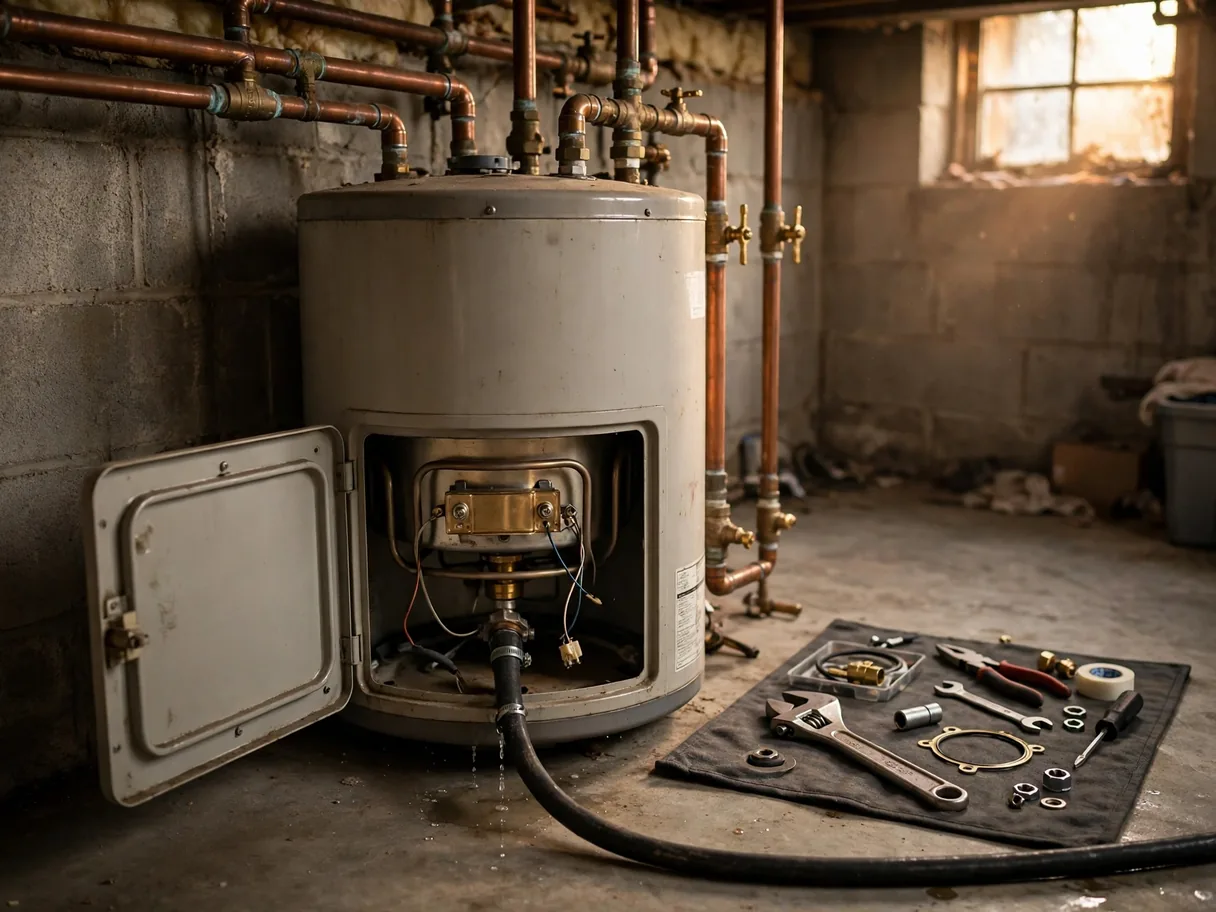
Water heaters quit at the worst times: the coldest morning of January, the night before family arrives, halfway through a shower. When yours does, the first question is simple — can this one be fixed, or is it done? The plumbers we connect you with answer that by testing the unit part by part, not by guessing from the driveway.
On an electric heater, a cold tank usually traces to a tripped breaker, a burned-out element, or a thermostat that stopped calling for heat. On a gas unit, the pilot assembly and the gas control valve are the usual suspects. Any of those is a single-part repair on a tank that is otherwise sound — and a repair for the plumber, not the homeowner: gas components are not do-it-yourself parts, and if you ever smell gas around the unit, get out of the house and call the gas utility first. If the diagnosis points past the heater itself — low pressure through the whole house, or water where it should not be — the same visit can point you toward leak detection instead of parts the heater does not need.
Those sounds are sediment, and Pocatello's water makes a great deal of it. The city supply tests at about 15.2 grains per gallon — very hard, among the hardest municipal water in Idaho — and every gallon that passes through your heater leaves a little mineral behind. It settles on the tank floor, traps water underneath, and that water boils and pops as it forces its way out. That is the rumbling you hear from the basement. It is a warning, not just a noise: the bottom of the tank overheats, the heater burns extra fuel to push heat through the layer, and the steel wears out years early. Our guide to hard water and water heaters in Pocatello walks through what that buildup does over a tank's life.
Flushing the tank and replacing the anode rod — the rod that is meant to corrode so the tank does not — can quiet a younger heater and buy it real years. On a tank that has rumbled for a long time, the flush still helps the plumber judge what is left. Sometimes the honest answer is that the tank is on its last stretch, and that conversation leads to water heater replacement on your schedule instead of during an emergency.
Rust-colored hot water points to corrosion inside the tank or an anode rod that has been used up. A sulfur smell in the hot water only — not the cold — is usually bacteria reacting with that same rod. Both are worth a visit while they are still small jobs. Caught early, a rod change is cheap protection for the tank. Ignored, the corrosion reaches the tank wall, and the talk changes from repair to replacement whether you are ready or not.
Most Pocatello homeowners ask some version of the same question: is this repair worth it? The plumbers in our network walk through the same three things every time. First, age — manufacturers rate a tank heater's working life at ten to twelve years in average water, and Pocatello's hard water pulls most local tanks down to eight or nine years. Second, condition — rust at the base, water under the tank, or a history of repeat repairs all count against it. Third, the part itself — an element or thermostat is a modest fix, while a gas control valve on a tired tank is a bigger bet.
If the tank loses that argument, you will hear about water heater installation options sized for your household, including whether a tankless water heater fits the house. If it wins, the repair gets done and the plumber tells you what to watch for next. Either way, the goal is the same: hot water back on, and a decision you understand. Homes in Old Town Pocatello and the older streets around Alameda are early and mid-century housing, where original-era plumbing is still in service and heaters are more likely to be late in their working lives — so that repair-versus-replace call comes up there more than anywhere else we serve.
Call (208) 753-1090 and describe what the heater is doing — no hot water, noise, rust, a leak, or a pilot that will not stay lit. We match the job with an independent local plumber serving your part of Pocatello or Chubbuck, and that plumber tests the unit at your home, names the failed part, and quotes the work before starting it. If the water on your floor is coming from a pipe instead of the tank, that is emergency plumbing, and you will be routed that way instead. One call, one visit, and a straight answer about your heater.
FAQ
On an electric heater, the usual causes are a tripped breaker, a burned-out heating element, or a failed thermostat. On a gas heater, a pilot light that has gone out or a gas control valve that has stopped working can do it — but gas components are not a homeowner repair, so do not try to relight, adjust, or replace them yourself. If you smell gas, leave the house and call the gas utility or a qualified professional. If the unit is also leaking or the hot water has turned rusty, the tank itself may be finished. A plumber tests the parts in one visit and tells you which one failed.
Sediment. Pocatello's city water is very hard — about 15.2 grains per gallon in the municipal supply — and the minerals in it settle across the bottom of the tank year after year. Water trapped under that layer boils and pops as it pushes through, which is the rumbling you hear. The tank overheats at the bottom, burns more fuel, and wears out faster. A flush and a new anode rod can settle down a younger tank. On an older one, heavy sediment is usually a sign the end is near.
It depends where the water is coming from. Leaks at the relief valve, the drain valve, or a fitting on top can usually be repaired. Water pooling under the tank or seeping through the tank body means the inner tank has corroded through, and that cannot be patched. That unit needs to be replaced before it lets go all at once. If you are not sure which kind you have, shut the water off to the heater and call.
A repair is priced by the part that failed and the time it takes to change it — an element, a thermostat, a thermocouple, a gas control valve. Access matters too: a heater with working room around it in a garage or basement is quicker than one wedged into a tight closet. Hard-water damage matters as well, since a tank full of sediment takes longer to drain and clean. The plumber tests the unit, names the failed part, and quotes the repair in your home before work starts.
Sometimes. A single simple part on a tank that is quiet, shows no rust, and is not leaking can buy real time. The same repair on a tank that rumbles, rusts at the base, or has already needed two fixes this year is usually money spent on a heater that is leaving soon anyway. Age counts double in Pocatello, because our hard water shortens tank life. The plumber should show you the age and the symptoms and talk it through, not just sell the bigger job.
If the tank used to keep up and now cannot, the common causes are a failed lower heating element on an electric unit, a broken dip tube that lets cold water mix at the top, or sediment taking up room in the tank so it holds less hot water than it should. Each one is a repair, not a replacement, as long as the tank itself is sound. A plumber can test which one it is in a single visit.
Call and describe what your heater is doing. We connect you with an independent local plumber serving Pocatello and Chubbuck.