
Leak Detection
Pinhole after pinhole is how dying pipe announces itself — detection confirms whether it is one leak or a system.
Repiping — Pocatello, ID
Whole-home and partial repiping for Pocatello houses whose galvanized and aging copper lines have run out of years — pressure back, leaks done, in PEX or copper.
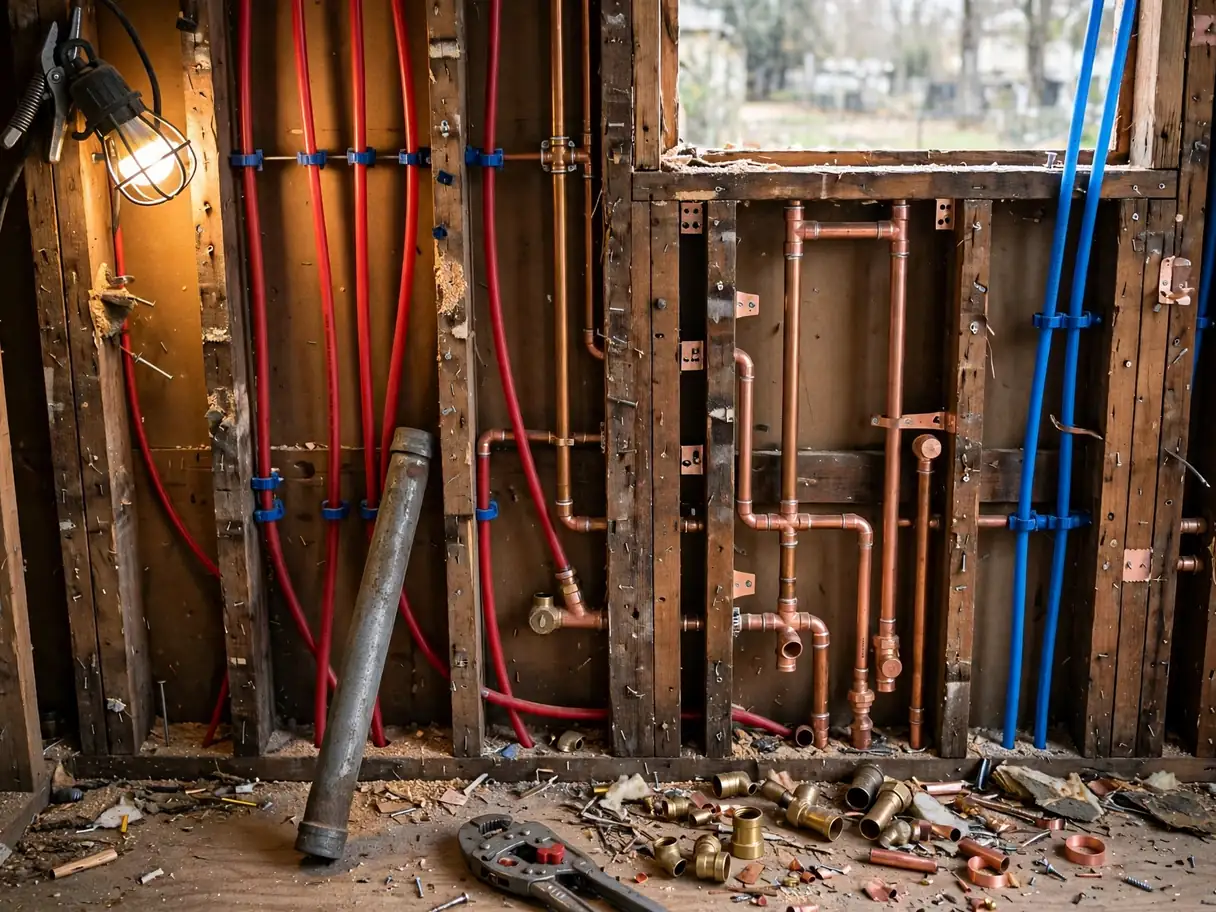
There comes a point in an old house where the plumbing problem is not a leak or a clog — it is the pipe. Pocatello's housing stock has a median build year around 1971, and roughly two-thirds of homes went up before 1980, when galvanized steel was still a common supply material. Galvanized pipe was rated in decades, and those decades are up. The zinc coating is gone, the steel has rusted from the inside, the channel your water travels through has narrowed to a fraction of its original width, and the walls of the pipe have thinned to the point where pinhole leaks stop being surprises and start being a schedule.
Repiping replaces that system — all of it, or the worst of it — with modern PEX or copper. The plumbers we connect you with repipe homes across Pocatello and Chubbuck, and the homeowners who call tend to describe the same handful of symptoms: showers that fade when a toilet flushes, brown water after a weekend away, a third leak in two years in a third different wall. One leak is a repair. A pattern of them is the pipe filing its retirement notice.
The job starts with a walk-through: every fixture counted, the existing pipe mapped where it can be seen, and access judged — an open basement or crawl space makes for a different job than finished walls throughout. New lines are then run alongside the old, usually in PEX fished through walls and joist spaces with far fewer openings than homeowners expect, and fixtures are tied over one by one. The old system is abandoned or removed as the new one takes over, water is restored fixture by fixture, and pressure testing confirms the new system before walls are closed.
Material choice is a real conversation, not a default. PEX is flexible — fewer fittings, faster runs, and a meaningful advantage in a city where January nights drop into the single digits, because PEX tolerates a freeze better than rigid pipe, tying directly into the risks covered under frozen and burst pipe repair. Copper is the traditional premium: rigid, durable, and familiar to every plumber who will ever work on the house. In Pocatello's hard water, both outlast the galvanized they replace by a wide margin, and many owners take the same moment to address the water itself with water softeners, so the new system starts life on gentler water.
Not every house needs the full job on day one. A home where the galvanized runs feed two bathrooms and the copper elsewhere is sound can repipe the bad sections and stage the rest. A home where every line is the same tired stock usually saves money doing it once — one mobilization, one round of wall openings, one pressure test — instead of paying to open the same walls three times in five years. The older housing around Old Town and the University District falls in the second camp more often than not, and the plumber's walk-through exists to tell you which camp yours is in, with the pipe in front of both of you.
The change is unglamorous and total. Showers hold their temperature when a toilet flushes, because the lines feeding them are full diameter again. The rust tint after vacations disappears. The pressure at the far end of the house matches the pressure at the near end, because nothing inside the pipe is stealing it. And the slow dread that comes with every drip sound in an old house — the flinch at the water bill, the listening for the next pinhole — goes quiet, because the system that caused it is gone, not patched. Homeowners who repipe usually say some version of the same thing: they wish they had done it before the last three repairs instead of after them. If your house is on repair number three, that sentence is for you.
Call (208) 753-1090 and describe the pattern — the pressure, the color, the leaks and where they have shown up. We connect you with an independent local plumber who walks the house, shows you the state of the pipe where it can be seen, and quotes the scope that fits: a section, a system, or a staged plan. No work starts until you have seen the pipe and the price. And if one of those aging lines has already let go and water is moving through a wall right now, say so — that call goes in as emergency plumbing first, and the repipe conversation happens once the house is dry.
FAQ
The signs build on each other: water pressure that has faded over the years, rusty or yellow water first thing in the morning, pinhole leaks that keep appearing in different places, and pipe that flakes or shows heavy corrosion where it is exposed in the basement. Any one can have another cause. Several together, in a house with fifty-year-old galvanized pipe, usually mean the system is at the end of its life.
Repiping cost follows the size of the house — how many bathrooms and fixtures the system feeds — the material chosen, and access: open basements and crawl spaces are quicker work than finished walls that have to be opened and patched. A partial repipe of the worst sections costs less than a whole-home job and is sometimes the right step. The plumber walks the house, counts the fixtures, and quotes the scope you choose before work begins.
Most whole-home repipes run a few days rather than a few weeks, because new PEX or copper runs are fished alongside the old lines and tied over fixture by fixture, so the house is without water for hours at a time, not days. Larger homes and full wall access take longer. The plumber lays out the sequence before starting, including which fixtures go live again at the end of each day.
Both are sound modern materials with different strengths. PEX is flexible, so it runs with fewer fittings, resists freeze damage better than rigid pipe, and is usually the quicker and less disruptive install. Copper is rigid, proven over a century, and preferred by some owners and some applications. In Pocatello's cold winters and hard water, the conversation is worth having with your actual house on the table — the plumber will explain which fits your layout and your water.
No. Many homes repipe in stages: the worst runs first — the galvanized sections feeding the bathrooms, for instance — with the rest scheduled when budget or timing suits. A staged plan still starts with the same whole-house walk-through, so today's section ties cleanly into tomorrow's, and nothing gets done twice. The plumber will tell you plainly if your system is past the point where staging makes sense.
Galvanized pipe is steel coated in zinc, and the coating was always temporary. As it wears away over decades, the steel rusts from the inside: the pipe's inner diameter shrinks with rust scale, which is the pressure loss old houses are famous for, and the walls thin until pinholes open. By fifty or sixty years — the age of much of Pocatello's galvanized stock — the pipe is living on borrowed time.
No. The work is sequenced so cutovers happen section by section, and in most homes the water is back on each evening — you lose water for hours while a section ties in, not for days. The plumber tells you before the job starts which hours of which days will be dry, so showers, laundry, and cooking can plan around them instead of being ambushed.
That pattern is the pipe, not bad luck. One call connects you with an independent local plumber who will walk the house and show you its state.