
Water Heater Repair
Sediment from hard water is the top cause of the rumbling, slow, short-lived tanks we see in Pocatello.
Water Softeners — Pocatello, ID
Pocatello's city water is very hard — about 15.2 grains per gallon — and it is rough on water heaters, fixtures, and appliances. We connect you with independent local plumbers who test, size, and install softeners.
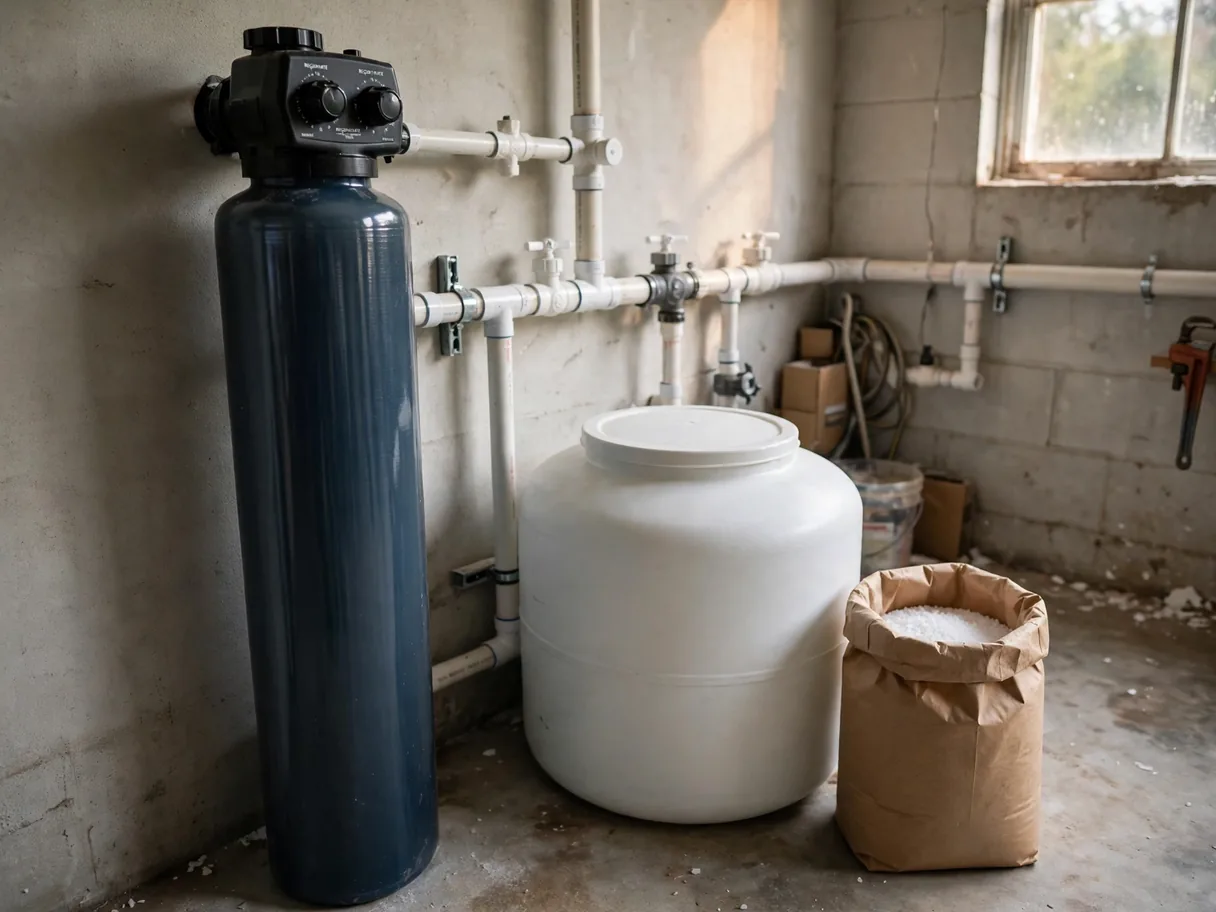
Ask a Pocatello plumber what kills water heaters here and the answer comes fast: the water itself. At about 15.2 grains per gallon, Pocatello's city water sits in the very hard band — among the hardest municipal water in Idaho — and every gallon carries minerals that settle in tanks, coat heating elements, crust over faucet aerators, and leave glass shower doors looking frosted no matter how often they are scrubbed. A water softener is the one appliance that treats the cause instead of the symptoms, which is why softener questions ride along with so many water heater repair calls in this city.
A softener works by ion exchange. Water passes through a bed of resin beads that trade the calcium and magnesium in the water for a trace of sodium, and the trapped minerals are flushed out during a regeneration cycle. What comes out the other side is water that cannot form scale. Your heater stops accumulating the layer that makes it rumble and die young, your dishwasher stops spotting, and the white crust around every faucet simply stops growing.
In the utility room, the change is the one that pays. A water heater fed softened water holds its efficiency and its lifespan — the difference between a tank that gives out early and one that runs its full years, which in this city is a real and recurring saving. It matters even more for tankless water heaters, whose narrow heat-exchanger passages scale up fast in raw Pocatello water and need yearly descaling to stay healthy.
In the kitchen and bathrooms, the change is daily and visible. Soap lathers instead of fighting the water. Laundry comes brighter with less detergent. Fixtures stop crusting, showerheads stop clogging a hole at a time, and the toilet and tub rings fade. Homes on the older streets of Alameda and Old Town, where fixtures and heaters have been drinking hard water for decades, feel the difference the most — and so do their water heaters, which is why softener sizing so often happens during a water heater installation visit, when the new tank's whole life is still ahead of it.
Softeners are sized in grains of capacity, and the right size comes from two numbers: how many people and bathrooms the house holds, and how hard the water actually is at your tap. Undersize it and the system regenerates constantly, wasting salt and water. Oversize it badly and you pay for capacity you never use. The plumber tests the water, does the math with you, and installs the unit at the main line with a bypass loop — so the softener can be serviced without shutting the house down — plus the drain and power the regeneration cycle needs.
Honesty helps here too, because softeners are sometimes sold as whole-water cures and they are not. A softener removes hardness minerals — calcium and magnesium — and that is its whole job. It does not filter your water, change its taste in any dramatic way, or remove iron, sulfur smells, or sediment; homes with those problems need different equipment aimed at them, and a plumber who tests first will tell you if your water has them. What a softener does, it does completely: it stops scale, everywhere in the house, all the time. In a city where scale is the number one killer of the most expensive plumbing appliance you own, that single job is enough to justify the unit on its own merits.
Because softeners get asked to do it all, it is worth naming the jobs separately. Softening is about hardness — the scale-forming minerals. Filtration is about what else rides in the water: sediment and rust flakes shed by older supply lines, and the chlorine that gives city water its taste and smell. Sediment and carbon filters handle those, plumbed in at the main line as whole-house units or fitted at a single tap, and they pair naturally with a softener — the filter upstream catching particles before the water reaches the resin bed, the softener downstream stopping scale through the whole house. Homes that need both usually know it from both directions at once: spotted glasses and crusting fixtures (softening) plus gritty water or a taste nobody likes (filtration). A plumber who tests first will tell you which half your water actually needs — plenty of Pocatello homes need the softener alone, and selling a filter to a house whose only problem is hardness is the same mistake as selling a softener to a house whose only complaint is taste.
When the spots come back and the soap goes flat again, the usual causes are plain: an empty or bridged brine tank, a clogged injector, a system that lost its settings in a power outage, or a resin bed that has simply worn out after years of regenerating in very hard water. Some of those are five-minute fixes; a dead resin bed on an old unit is a replacement conversation. Either way it is a diagnosis, not a guess, and it can ride along with other work — a softener check is commonly added to repiping and heater visits, since all three share the same enemy.
Call (208) 753-1090 and say whether you are starting from scratch or nursing an old unit. We will connect you with an independent local plumber serving Pocatello and Chubbuck who tests your water first — because at 15.2 grains, the test is not a formality — and sizes the system to your home.
FAQ
Pocatello's city water supply tests around 15.2 grains per gallon, which puts it in the very hard range — among the hardest municipal water in Idaho. The exact number at your own tap varies a little from house to house. You can see it without a test: white crust on faucets and showerheads, spots on every glass, soap that will not lather, and a water heater that rumbles years before it should. A plumber can test your water at the tap and size a softener to the actual number.
A softener removes the calcium and magnesium that make water hard, before that water reaches your water heater, dishwasher, washing machine, and fixtures. The minerals are what coat a water heater's tank and heating surfaces, so softened water means the heater runs cleaner and lasts longer, fixtures stop crusting over, and soaps and detergents work the way they are supposed to.
Cost follows the size of the system — which is set by your household size and how hard your water is — and the plumbing work to tie it in: a bypass loop, a drain for the regeneration cycle, and an electrical outlet nearby. Homes with an existing softener loop are quicker installs than homes where the plumber has to build one at the main line. The plumber tests your water, sizes the unit, and quotes the full install at your home.
Yes, but it is light: keeping the brine tank filled with salt, and an occasional check that the system is regenerating on schedule. Beyond that, softeners run for years with little attention. If yours stops softening — the spots and crust come back — the cause is usually an empty brine tank, a clogged venturi, or a worn resin bed on an older unit, all of which a plumber can diagnose.
Yes. Most people notice it first in the shower — soap lathers easily and rinses with a slick feel that takes a week to get used to. Laundry comes out cleaner with less detergent, and the white scale on fixtures stops building. What a softener does not do is change the taste much or remove anything but hardness minerals; it is a plumbing and appliance decision first.
It is the best protection there is in hard water. A tankless unit's heat exchanger has narrow passages that scale up quickly at 15.2 grains; softened water slows that buildup dramatically, so the unit holds its efficiency and the descaling interval stretches. If you already own a tankless unit, the pairing is worth discussing at any service visit.
By grain capacity against two numbers: how hard your water tests at the tap, and how much water your household uses in a day, which follows the number of people and bathrooms. Multiply the two and you get the grains the system must remove between regenerations; the right unit is the one that handles that load while regenerating every few days rather than every night. The plumber does that math with your test result in hand.
Yes — filtration is the softener's companion, aimed at different problems. A sediment filter catches the rust flakes and grit that aging supply lines shed. A carbon filter works on chlorine, which is where most taste and odor complaints about city water come from. Whole-house filters are plumbed in at the main line, often alongside a softener, and smaller filters serve a single tap. What a filter does not do is soften — hardness minerals pass through most filters untouched — which is why the two are so often installed together: the filter for particles and taste, the softener for scale. The plumber looks at your water and your complaints and recommends the combination that matches them — or tells you plainly that one of the two is all you need.
Start with a water test at your tap. One call connects you with an independent local plumber serving Pocatello and Chubbuck.